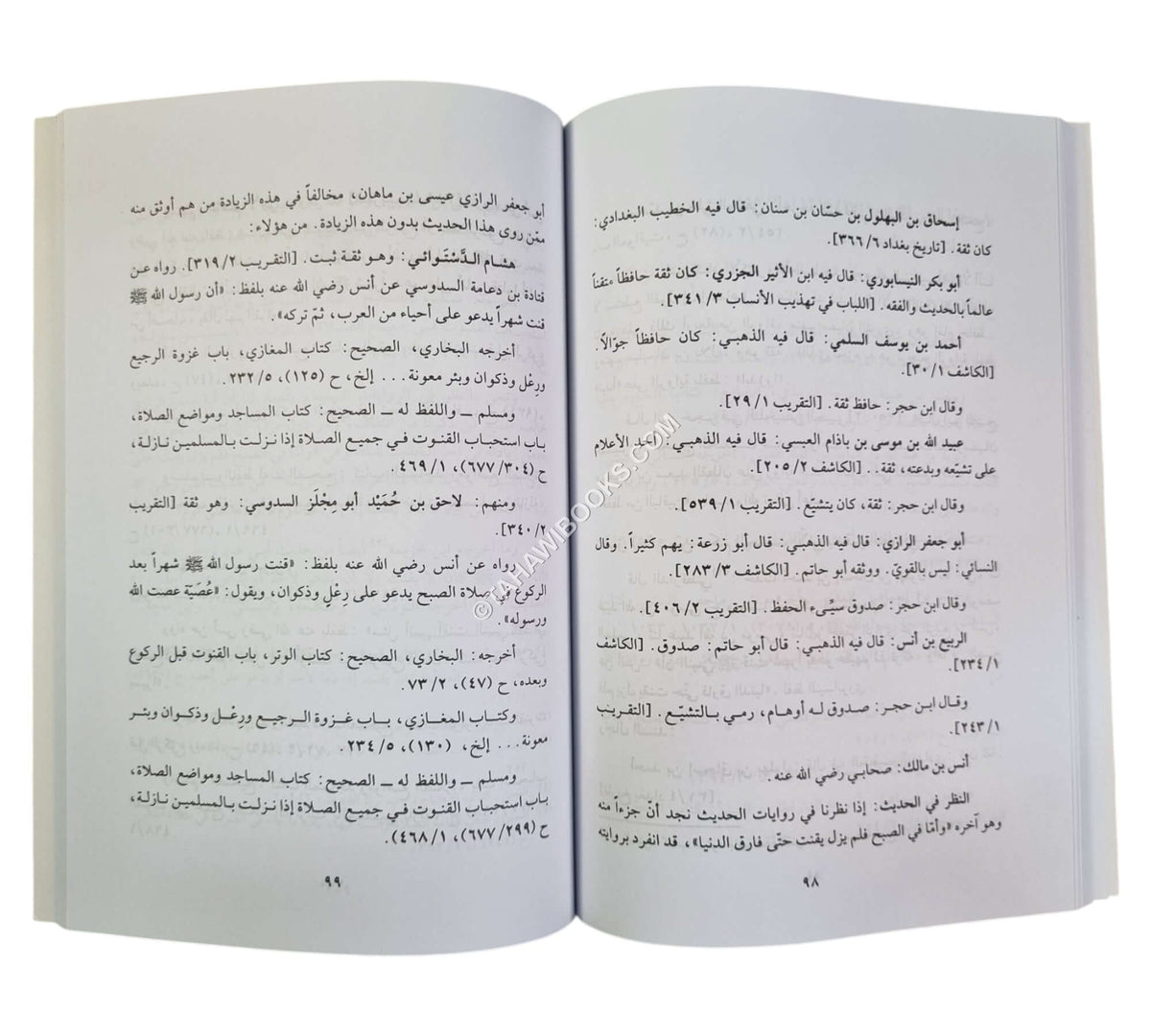
A systematic and practical guide to the study and critical evaluation of Ḥadīth chains of transmission (Asānīd), designed to teach students how to apply the principles of Muṣṭalaḥ al-Ḥadīth, ʿIlm al-Rijāl and al-Jarḥ wa’l-Taʿdīl when examining the authenticity of Prophetic narrations.
The work forms the second volume of the author's Manāhij al-Muḥaddithīn (مناهج المحدثين) series, a three-part course on the methods employed by Ḥadīth scholars in examining and authenticating narrations. Whereas the first volume deals with Takhrīj al-Ḥadīth, this volume concentrates specifically on the practical investigation of chains of transmission and the application of the principles used by the classical Ḥadīth critics.
In his introduction, Dr al-Biqāʿī explains that although numerous works discuss the theoretical principles of Ḥadīth criticism, students also require a structured method for applying these principles to actual chains of transmission. Accordingly, he organises the process into five successive stages, each explained through relevant reference works, practical examples and exercises.
The book opens with an introduction to the importance of the Isnād in Islamic scholarship, its role in preserving the Sunnah and the development of the biographical sciences used to investigate narrators. The author then explains the relationship between the study of an Isnād and the final judgement concerning a Ḥadīth, emphasising that an apparently authentic chain does not necessarily establish the authenticity of a narration without further examination.
The five principal stages of investigation are:
1. Identifying the Narrators: Establishing the precise identity of each narrator, distinguishing individuals with similar names, identifying their lineage and examining their biographical details. The author introduces the principal reference works dealing with names, Kunyahs, genealogies, ambiguous narrators and the chronological generations of transmitters.
2. Establishing the Reliability of the Narrators: Investigating each narrator's integrity (ʿAdālah) and accuracy (Ḍabṭ) through the classical works of al-Jarḥ wa’l-Taʿdīl. Students are introduced to biographical dictionaries of the Ṣaḥābah, trustworthy narrators, weak narrators and comprehensive critical biographical collections, with exercises in locating and interpreting the judgements of earlier scholars.
3. Verifying the Continuity of the Isnād: Determining whether each narrator could have received the narration from the person preceding him in the chain. This involves examining dates, geographical circumstances, the possibility of meetings and direct transmission, and the technical expressions used in narrating Aḥādīth.
4. Investigating Irregularities and Hidden Defects: Examining whether a narration contains Shudhūdh (irregularity) or a concealed defect (ʿIllah Qādiḥah). This stage introduces the importance of comparing different chains and wordings, studying additional transmissions and identifying subtle problems that may not be apparent from the outward reliability of the narrators.
5. Searching for Supporting Narrations: Investigating Mutābaʿāt and Shawāhid—parallel chains and corroborating narrations—to determine whether they strengthen the report under examination and assist in reaching a reliable judgement concerning it.
An especially valuable feature of the book is its extensive use of practical exercises (Tadrībāt) throughout the chapters. Rather than merely listing reference works, the author demonstrates their application and requires students to identify narrators, locate biographical entries, investigate critical assessments and examine actual chains of transmission.
The work also provides detailed guidance on the major classical reference books, explaining their particular functions and how they should be consulted during an investigation. These include works on narrator identification, biographical evaluation, chronological generations, dates of death, ʿIlal al-Ḥadīth and the various forms of discontinuity in transmission.
Dr al-Biqāʿī's approach is particularly beneficial because it transforms what can initially appear to be a complex and scattered body of technical knowledge into a clear, sequential research procedure. At the same time, he reminds students that mastering these steps is only the beginning of Ḥadīth criticism and that the judgements of the great classical scholars remain indispensable.
Published by Dār al-Bashāʾir al-Islāmiyyah, Beirut, the work was issued in 1422 AH / 2001 CE as part of the Manāhij al-Muḥaddithīn series.
A particularly valuable textbook for intermediate and advanced students of Ḥadīth, especially those who have already studied the theoretical principles of Muṣṭalaḥ al-Ḥadīth and wish to develop the practical skills necessary for investigating chains of transmission. Its structured methodology, carefully selected reference works and numerous exercises also make it highly suitable for use in specialised Ḥadīth classes, Islamic seminaries and university courses.