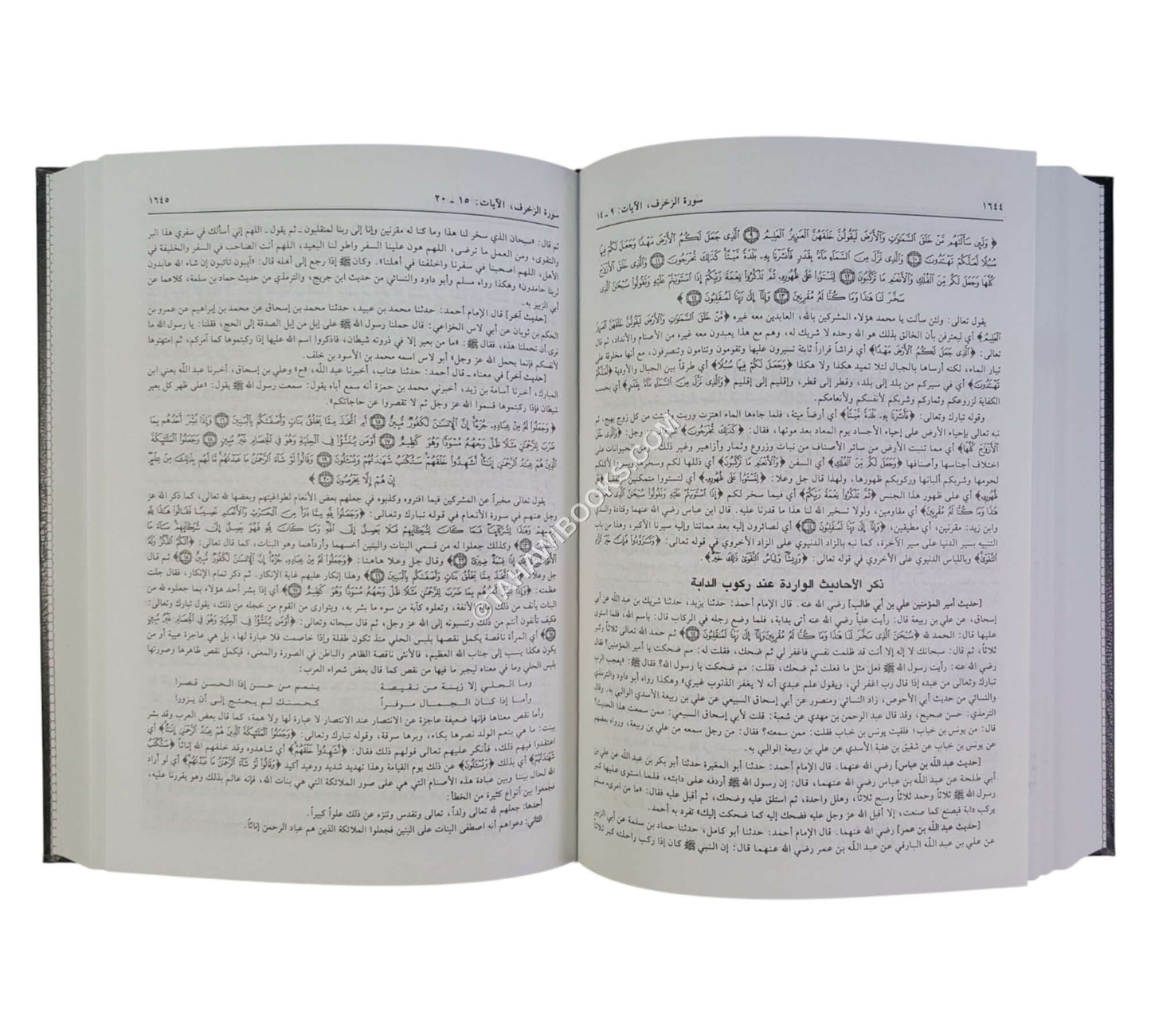
Commonly known as Tafsīr Ibn Kathīr, this celebrated commentary is the work of the great Damascene scholar ʿImād al-Dīn Abū al-Fidāʾ Ismāʿīl ibn ʿUmar ibn Kathīr al-Qurashī (710–774 AH / 1310–1373 CE), an eminent mufassir, muḥaddith, historian and Shāfiʿī jurist. Ibn Kathīr studied under some of the foremost scholars of eighth-century Damascus, particularly al-Mizzī, al-Dhahabī and Ibn Taymiyyah, and acquired particular distinction in Ḥadīth and its critical sciences. This expertise would become one of the defining features of his Qurʾānic commentary.
Tafsīr Ibn Kathīr is one of the most important and widely read works of tafsīr bi’l-maʾthūr, explaining the Qurʾān primarily through transmitted evidence while also employing critical analysis and ijtihād where necessary. Ibn Kathīr sets out his principles in an important introduction heavily influenced by the methodology of his teacher Ibn Taymiyyah. His hierarchy of interpretation begins with explaining the Qurʾān through the Qurʾān itself, followed by the Sunnah, the explanations of the Ṣaḥābah and finally those of the Tābiʿūn.
One of the work's most distinctive features is Ibn Kathīr's extensive practice of tafsīr al-Qurʾān bi’l-Qurʾān. He brings together verses from different parts of the Qurʾān to show how one passage clarifies, qualifies or expands another, using this method to reconcile apparently conflicting passages, interpret unrestricted expressions through restricted ones and illuminate meanings that might otherwise be overlooked. His approach in this respect had a significant influence upon later mufassirūn, particularly al-Qāsimī and al-Shinqīṭī.
Equally important is the commentary's exceptional Ḥadīth content. Drawing upon the major collections—including the Kutub al-Sittah, Muwaṭṭaʾ Mālik, Musnad Aḥmad and other primary sources—Ibn Kathīr frequently supplies isnāds and does not merely transmit reports, but critically examines their narrators and chains. He identifies weaknesses, compares variant transmissions, adduces supporting narrations and sometimes subjects the text itself to critical scrutiny. He applies similar critical methods to the reports of the Ṣaḥābah and Tābiʿūn, making the tafsīr an important resource not only for Qurʾānic interpretation but also for students of Ḥadīth and al-Jarḥ wa’l-Taʿdīl.
Ibn Kathīr also pays careful attention to Asbāb al-Nuzūl, comparing reports concerning the circumstances of revelation and attempting to reconcile apparently conflicting accounts. Arabic vocabulary, grammar and poetry are employed where needed, drawing upon authorities such as al-Farrāʾ, Abū ʿUbaydah and al-Akhfash. Legal discussions occur particularly where a verse demands them: Ibn Kathīr presents the opinions and proofs of the jurists, generally favouring the Shāfiʿī position while occasionally preferring another view where he considers its evidence stronger.
Another noteworthy aspect is his critical treatment of Isrāʾīliyyāt. He divides such reports into those confirmed by Islamic sources, those contradicted by them, and those concerning which revelation remains silent. Although a considerable number of Isrāʾīliyyāt still occur in the commentary, Ibn Kathīr frequently identifies problematic reports, rejects those contrary to established evidence, or suspends judgement where neither confirmation nor rejection is warranted. This critical engagement with Judaeo-Christian material became one of the recognised characteristics of his tafsīr.
With its combination of Qurʾān-by-Qurʾān interpretation, Prophetic Ḥadīth, reports of the Salaf and careful critical evaluation of transmitted material, Tafsīr Ibn Kathīr became one of the most influential works in the history of Qurʾānic exegesis. It remains particularly valuable for students seeking a substantial narration-based commentary that combines the legacy of earlier authorities—above all al-Ṭabarī—with the author's own considerable expertise in Ḥadīth, history and Fiqh.
This edition is in 2 thick volumes, with a smallish font, to make it easier to carry the book around.