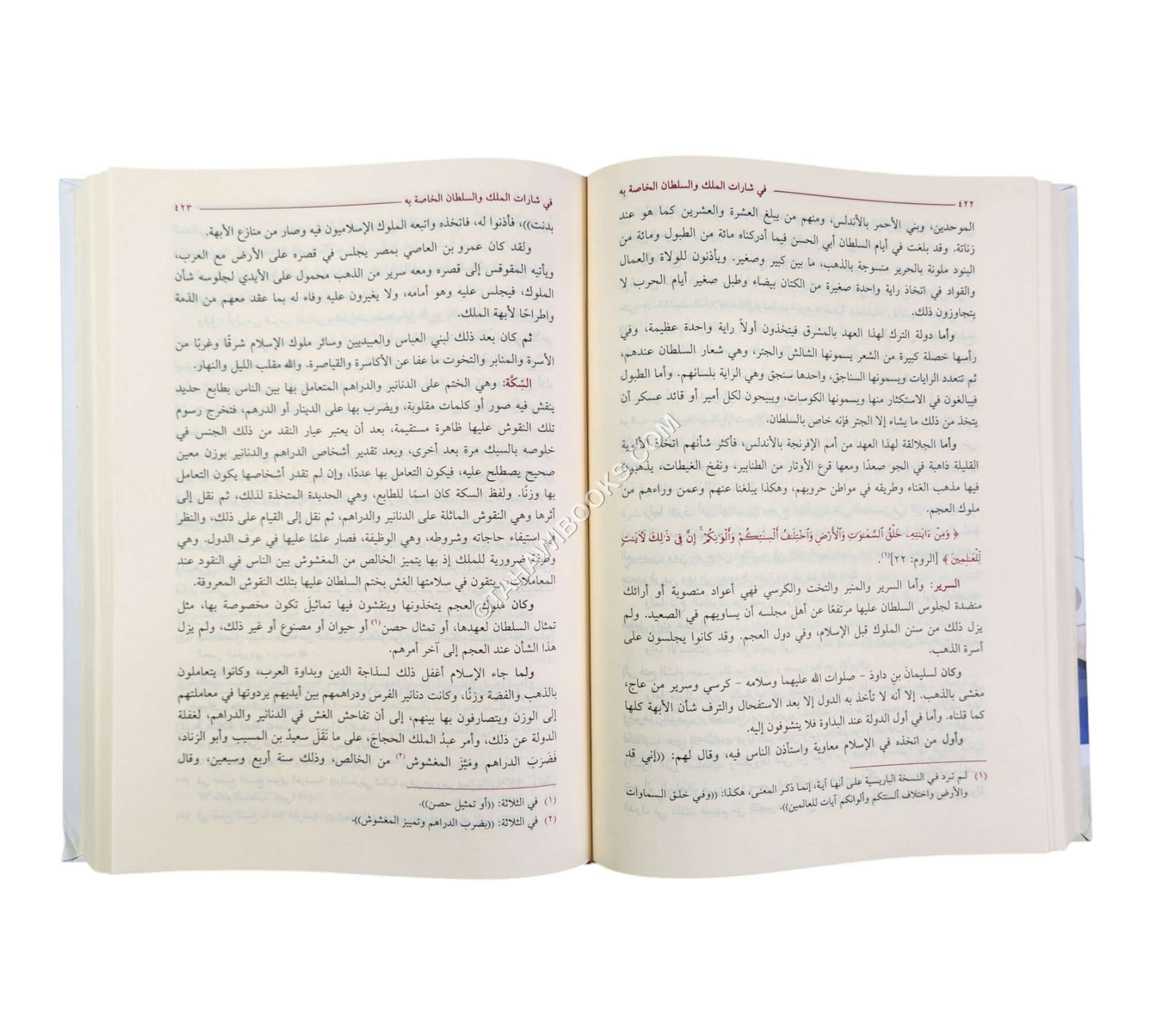
مقدمة ابن خلدون وبذيلها شرحها المسمى الجوهر المكنون
Muqaddimat Ibn Khaldun wa bi Dhayliha Sharhuha al-Musamma al-Jawhar al-Maknun
ابن خلدون عبد الرحمن بن محمد الحضرمي
2713
11009
A landmark of Islamic intellectual history and one of the most influential classical works on civilisation, society, politics, economics, and the rise and fall of nations. Muqaddimat Ibn Khaldūn, by the celebrated historian and thinker ʿAbd al-Raḥmān ibn Khaldūn (732–808 AH), is a remarkable study of the principles governing human societies and historical developments. This edition from Dār al-Kutub al-ʿIlmiyyah includes the accompanying work al-Jawhar al-Maknūn, offering readers both Ibn Khaldūn's celebrated text and valuable scholarly annotations.
Originally written as the introduction to his monumental historical work Kitāb al-ʿIbar, the Muqaddimah goes far beyond conventional historical narrative. It explores the nature of human civilisation (ʿumrān), the formation of societies, political authority, the rise and decline of dynasties, economic activity, education, and the development of knowledge and the sciences. Ibn Khaldūn examines how geography, livelihoods, social solidarity (ʿaṣabiyyah), political power, taxation, and economic conditions influence the course of history.
Among the work's most remarkable contributions is its systematic approach to understanding and evaluating historical events. Rather than merely recording accounts of earlier peoples and rulers, Ibn Khaldūn investigates the underlying causes of historical developments and establishes principles for distinguishing credible historical reports from those that contradict the realities of human society. His discussions of nomadic and settled communities, the relationship between taxation and prosperity, the effects of luxury upon ruling dynasties, and the factors contributing to political decline remain especially noteworthy.
A particularly valuable feature of this edition is the accompanying al-Jawhar al-Maknūn, by Wāʾil Ḥāfiẓ Khalaf. Drawing upon his larger work Nuzhat al-ʿUyūn fī Sharḥ Muqaddimat Ibn Khaldūn, the scholar provides extensive annotations that identify and reference the Aḥādīth cited in the Muqaddimah, trace historical reports and poetry to their sources, and supply biographical information on numerous personalities mentioned throughout the text. He also explains unfamiliar expressions and draws attention to passages requiring clarification.
This edition is further distinguished by its attention to textual accuracy and the restoration of material missing from earlier printings. The editor consulted fifteen copies and printed versions of the Muqaddimah, including the early Paris edition, the edition prepared by Shaykh Naṣr al-Hūrīnī, and the edition of Dr ʿAlī ʿAbd al-Wāḥid Wāfī. The resulting text incorporates substantial passages and numerous expressions omitted from commonly circulated editions, while correcting many printing errors and textual alterations. These improvements are especially beneficial for researchers and serious readers who require a more complete and carefully reviewed text.
Highly recommended for students of Islamic history, researchers, scholars, and readers interested in political thought, economics, sociology, and the history of ideas, this edition combines one of the great intellectual achievements of the Islamic scholarly tradition with useful explanatory material and significant textual improvements, making it a valuable addition to any serious Arabic library.
|
Title |
مقدمة ابن خلدون وبذيلها شرحها المسمى الجوهر المكنون |
|---|---|
|
Author |
ابن خلدون عبد الرحمن بن محمد الحضرمي |
|
Author's Year of Demise |
808 |
|
Publisher |
العلمية-بيروت |
|
Volumes |
1 |
|
Pages |
928 |
|
Cover |
Hard |
|
Weight |
1.3 |
|
Dimensions |
24x17x4 |
|
Publication Year |
2025 |
|
Print Quality |
Beirut Good-Quality Edition |
|
Tashkil/Harakat |
Little to No Tashkil/Harakat |
|
Text Colour |
Multi-Coloured |
|
Content |
|

R304.00