With so many classical texts available in Ḥanafī Fiqh, where should a student begin, and how can the essential rulings of the Madhhab be studied in a clear, organised and reliable manner? بغية المكتفي من فروع الفقه الحنفي – قسم العبادات, by Shaykh ʿAbd al-Ilāh ibn Muḥammad al-Mullā, is a thoughtfully prepared manual that brings together the important rulings of worship from the authoritative works of the Ḥanafī Madhhab, presenting them in accessible contemporary Arabic while remaining firmly grounded in the classical legal tradition.
The author explains that the great Ḥanafī manuals were composed across different historical periods, each reflecting the scholarly methods and educational needs of its time. Recognising that beginners still require these foundational texts, he set out to extract their most important legal discussions and present them in a fresh, systematic format, making the rulings easier to understand, memorise and apply.
One of the book's principal strengths is its extensive reliance upon the recognised authoritative works of the Madhhab. Among the sources consulted are Mukhtaṣar al-Ṭaḥāwī, Mukhtaṣar al-Qudūrī, Al-Lubāb of al-Ghunaymī, Al-Mukhtār li’l-Fatwā and its commentary Al-Ikhtiyār, Majmaʿ al-Baḥrayn, Kanz al-Daqāʾiq and Al-Baḥr al-Rāʾiq, Tanwīr al-Abṣār and Al-Durr al-Mukhtār, together with Ibn ʿĀbidīn's celebrated Radd al-Muḥtār. The author also benefits considerably from Nūr al-Īḍāḥ wa-Najāt al-Arwāḥ and its modern scholarly annotations.
Rather than reproducing lengthy discussions from these sources, the author concentrates on the positions adopted for Fatwā and the authoritative rulings of the later Ḥanafī scholars. Where differences of opinion exist within the Madhhab, he generally identifies the relied-upon position without burdening beginners with extensive debates.
The work deliberately focuses on the practical rulings of Fiqh rather than their detailed evidences, which the author explains are available in the larger legal commentaries. This allows students to concentrate on understanding the rulings themselves, their conditions, classifications and applications.
An especially useful feature is the inclusion of contemporary legal questions, with their rulings derived from the established principles and statements of the classical Ḥanafī authorities. The author particularly mentions the incorporation of modern issues relating to Zakāh, fasting and Ḥajj, giving the book practical relevance beyond the circumstances addressed in older manuals.
Before entering the chapters of worship, the book provides a concise but informative introduction to the Ḥanafī Madhhab. This includes a biography of Imām Abū Ḥanīfah, his upbringing and pursuit of knowledge, his principal students, and the role played by successive generations of scholars in developing and transmitting the Madhhab.
The introduction also explains the foundational principles of Ḥanafī legal reasoning, including the Qurʾān and Sunnah, the statements of the Ṣaḥābah, Qiyās, Istiḥsān and the consideration of established custom (ʿUrf). It further introduces the principal authoritative books, legal terminology and the historical spread of the Madhhab.
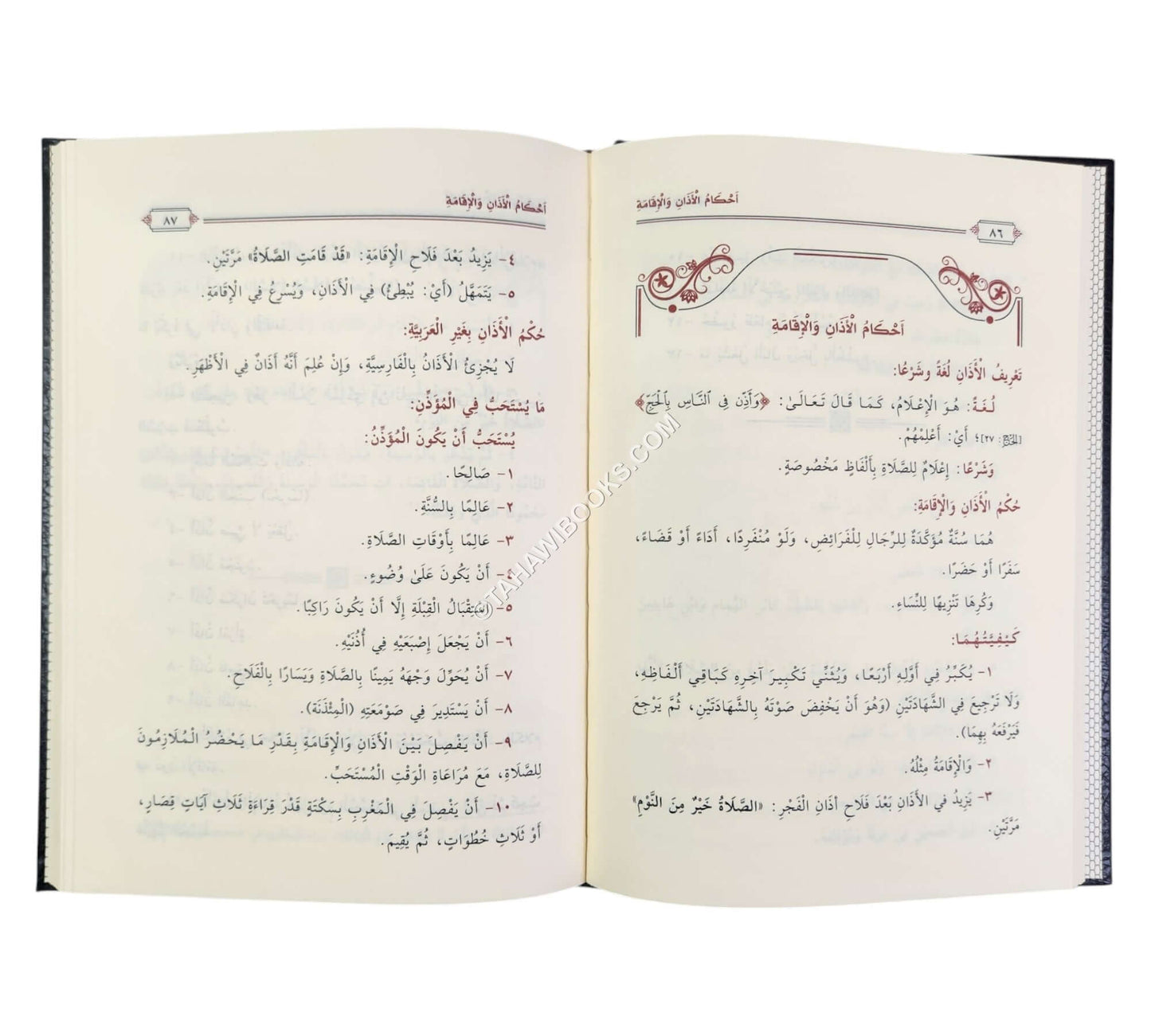
The main text then presents the rulings of Ṭahārah, Ṣalāh, Zakāh, Ṣawm and Ḥajj, arranged into clearly defined chapters, sections and individual legal questions.
The chapters on purification illustrate the book's method particularly well. They distinguish between different categories of water, types of impurity and their legal consequences, before discussing Istinjāʾ, Wuḍūʾ, Ghusl and Tayammum. The rulings are subdivided into practical categories such as conditions of obligation, conditions of validity, obligatory acts, Sunnahs, recommended practices, disliked actions and invalidators.
This careful classification continues throughout the book, helping students understand not merely what a ruling is, but how it relates to the validity and proper performance of an act of worship.
The later chapters address fasting and Iʿtikāf, followed by the detailed rulings of Ḥajj and ʿUmrah. The discussions of Ḥajj include its conditions, pillars, Wājib acts, Sunnahs, the practical sequence of its rites, matters specific to women, Qirān, Tamattuʿ, penalties for violations of Iḥrām and the rulings of Hady.
The book's combination of classical authority, concise explanations, clear subdivisions and selected contemporary applications makes it particularly suitable for systematic study. Its accessible presentation helps beginners acquire a firm grounding in the Madhhab while also serving as a convenient reference for those wishing to revise important legal rulings.
An excellent textbook for Madrasah students, teachers and anyone beginning a structured study of Ḥanafī Fiqh. By drawing upon centuries of authoritative scholarship and presenting the essential rulings in a manageable modern format, بغية المكتفي من فروع الفقه الحنفي – قسم العبادات provides a valuable bridge between introductory learning and the larger classical manuals of the Madhhab.